
Dr Jemeen Sreedharan
Dr Sreedharan is a neurologist with a research interest in TDP-43, a DNA/RNA-binding protein that is dysregulated in motor neuron disease and dementia including frontotemporal dementia and Alzheimer's disease. He has received both the Alzheimer’s Research UK Jean Corsan Prize and the David Hague Early Career Investigator Award in recognition of his research.
Dr Sreedharan's other roles include being sub-investigator on a number of ALS clinical trials and programme co-lead for stem cell-based accelerated drug discovery at the UK MND Research Institute. He co-organises the biennial UK-Japan Neuroscience Symposium and the ICGEB Arturo Falaschi Conference on TDP-43 function and dysfunction in disease. He also lectures on MSc courses in Clinical Neuroscience, Clinical Neuropsychiatry and Neuroscience, and the BSc course in Neuroscience at King's College London.


Alessandro Abram
Research Assistant
Alessandro earned a BSc in Biotechnology from the University of Trento and a MSc in Pharmaceutical Biotechnology from the University of Bologna. In 2023, he relocated to the UK to join bit.bio, a Cambridge-based company specialised in products derived from the efficient programming of iPSCs into mature cell types using proprietary Opti-OX™ technology. Alessandro joined Dr Sreedharan's Lab in August 2025 and will contribute to investigating the role of SCFD1 and G2E3 in MND, exploring their potential as therapeutic targets. This is a Darby Rimmer Foundation funded project in partnership with Prof. Alfredo Iacoangeli in the Department of Biostatistics.
alessandro.abram@kcl.ac.uk

Dr Izzet Akcay
Postdoctoral Researcher
Dr Akcay received his PhD from ETH Zurich, studying quantitative genetics of starvation resistance in fruit flies. After two post-doctoral terms, working on cancer genetics, cancer cell signalling, and monogenic diabetes, he switched to neuroscience by joining Dr Sreedharan’s lab in July 2023. Here, he is investigating the effects of ALS-associated variants in TARDBP and CFAP410 genes on the cellular phenotypes of iPSC-derived neurons and microglia.

Leon Crowley
PhD Student
Leon studied Biology at the University of York before completing an MSc in Translational Neuroscience at Imperial College London, and started his PhD at the Sreedharan lab in October 2022. During his PhD, he will be utilising CRISPR to manipulate a heterozygous M337V TARDBP mutation in a patient iPSC line. Additionally, in collaboration with Omer Bayrakter (Wellcome Sanger Institute), he will be using spatial transcriptomics to explore cell-type specific molecular changes across different brain regions in the TARDBP Q331K knock-in mouse model.

Matvey Evtushenko
Research Assistant
Matvey graduated from the University of Bath in 2025 with an MSci in Biochemistry. During his Master’s project, he optimised a microfluidic platform to model the transcellular propagation of tau from neurons to glia. He subsequently joined the Sreedharan Laboratory as a Research Assistant, where he is involved in generating a library of mutant TDP-43 iPSC lines and investigating their downstream cellular and molecular effects.

Aleksandra Kaliszewska
PhD Student
Aleks obtained her BSc (Hons) in Neuroscience from University College Dublin (UCD), Ireland, before completing an MRes at the University of Edinburgh. In 2019 she moved to King's, working on a gene therapy project in Prof. Chris Shaw’s group before joining the BRAIN Pre-clinical Neuroimaging Centre. She started her PhD in the Sreedharan lab in June 2023, investigating the role of N-terminal splice variants of tau and inhibitory interneuronal network dysfunction in ALS-FTD using TDP-43 knock-in mouse models and ultrastructural histological/ imaging techniques.
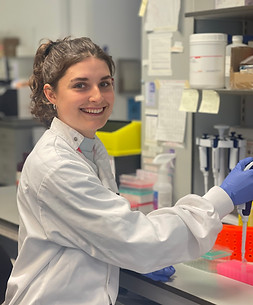
Dulcie Keeley
Research Assistant
Dulcie graduated from Queen’s University Belfast in 2020 with a BSc in Biological Sciences. Since then, she has been developing her molecular biology skills by working on genetically engineering tropical crops to improve yield and sustainability. She joined the Sreedharan lab as a research assistant and is involved in generating novel iPSC lines through CRISPR.

Vaishnavi Manohar
PhD Student
In the Sreedharan lab, Vaishnavi is interested in looking at the effect of variants in the non-coding region of the TARDBP gene on ALS/FTD pathology. Her project uses an amazing CRISPR-based technique called GenIE, to screen for over 100 TDP variants for their influence on TDP-43 gene expression, using iPSC derived cell models. Vaishnavi has previously worked on a screening project in flies during her master's project at the National Centre for Biological Sciences (NCBS), Bangalore.

Dr Aleksandra Mech
Postdoctoral Researcher
Dr Mech completed her undergraduate degree in Biotechnology at University of Gdansk and her master's degree in Genetics of Human Disease at UCL. During her PhD in Prof. Caroline Brennan's lab at Queen Mary University of London, she used zebrafish to identify novel genetic variants associated with nicotine addiction. Her work in Dr Sreedharan's lab involves generating CRISPR/Cas9 iPSC lines with mutations associated with ALS.

Sara Milani
PhD Student
Sara graduated with an integrated MSc (MSci) in Neuroscience from King’s College London in 2020; where she conducted her BSc project in Prof. Carmine Pariante’s lab and then joined Prof. Chris Miller’s lab investigating ER-mitochondria contacts in Sigma-1-associated ALS. Having worked in the Sreedharan lab for a year developing a screening assay to identify modifiers of TDP-43 autoregulation, she has now started her PhD in which she will be investigating the role of heterogeneous ribonucleoproteins (hnRNPs) in neurodevelopment and neurodegeneration using iPSC-derived models and CRISPR/gene-editing techniques.

Dr Ravindra Prajapati
Postdoctoral Researcher
During his scientific training, Dr Prajapati acquired interdisciplinary research experiences. After obtaining his PhD in the field of protein folding and thermodynamics, he developed an interest in understanding transcriptional regulation of cell fate decisions, and he worked with Dr David Ish-horowicz (Cancer Research UK), Dr Nicole Fracis (Harvard University) and Andrea Streit (King's College London). Presently, he is dissecting the molecular mechanisms of TDP-43 autoregulation in ALS using proteogenomics.

Isadora Rawlinson
MBBS PhD Student
Isadora studied Biological Sciences at University College London on an integrated Master's programme, graduating with a MSci in Cell and Devleopmental Biology in 2024. Her project investigated on the pathomechanistic overlap between Alzheimer’s Disease, Frontotemporal Dementia, and ALS. She then began Graduate Entry Medicine at King’s College London, where she joined the Sreedharan lab as a summer student in 2026, investigating iPSC-derived microglial response to TDP-43. Isadora was awarded the first KCL MBBS PhD Studentship to continue her work on patient-derived microglia. She will begin her 3-year doctoral programme in October 2026, before returning to complete her final years of medical school.

Harriet Williams
PhD Student
Harriet completed her undergraduate degree in Neuroscience at the University of Edinburgh, followed by a MRes in Tissue Engineering at King’s College London. During her Masters project she optimised a bioengineered in vitro platform to model myelination of long motor neuron axons. Harriet joined the Sreedharan lab as a PhD student in October 2026, after working as a research assistant at the Centre for Developmental Neurobiology at King’s. Her project will explore ALS patient-specific genetic variants of the protein SARM1 and their role in axon degeneration, using iPSC-derived motor neurons.
Lab Alumni
Dr Michael Niblock | Postdoctoral Researcher
Dr Anushua Ghosh | Postdoctoral Researcher
Dr Matthew White | Postdoctoral Research Fellow
Dr Anna Underhill | Postdoctoral Researcher
Dr Shiden Solomon | Postdoctoral Researcher
Jedidiah Maatita | Research Assistant